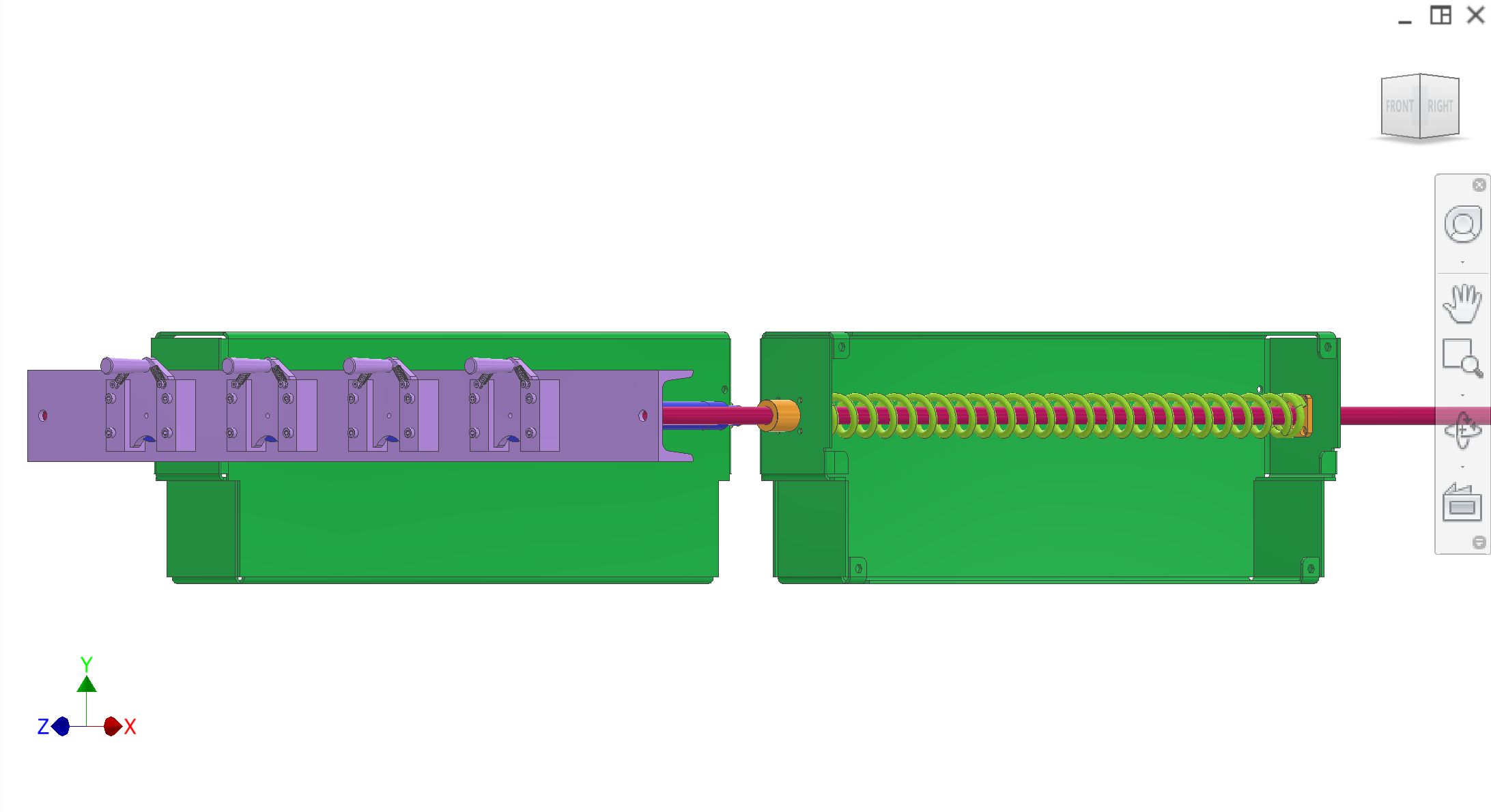
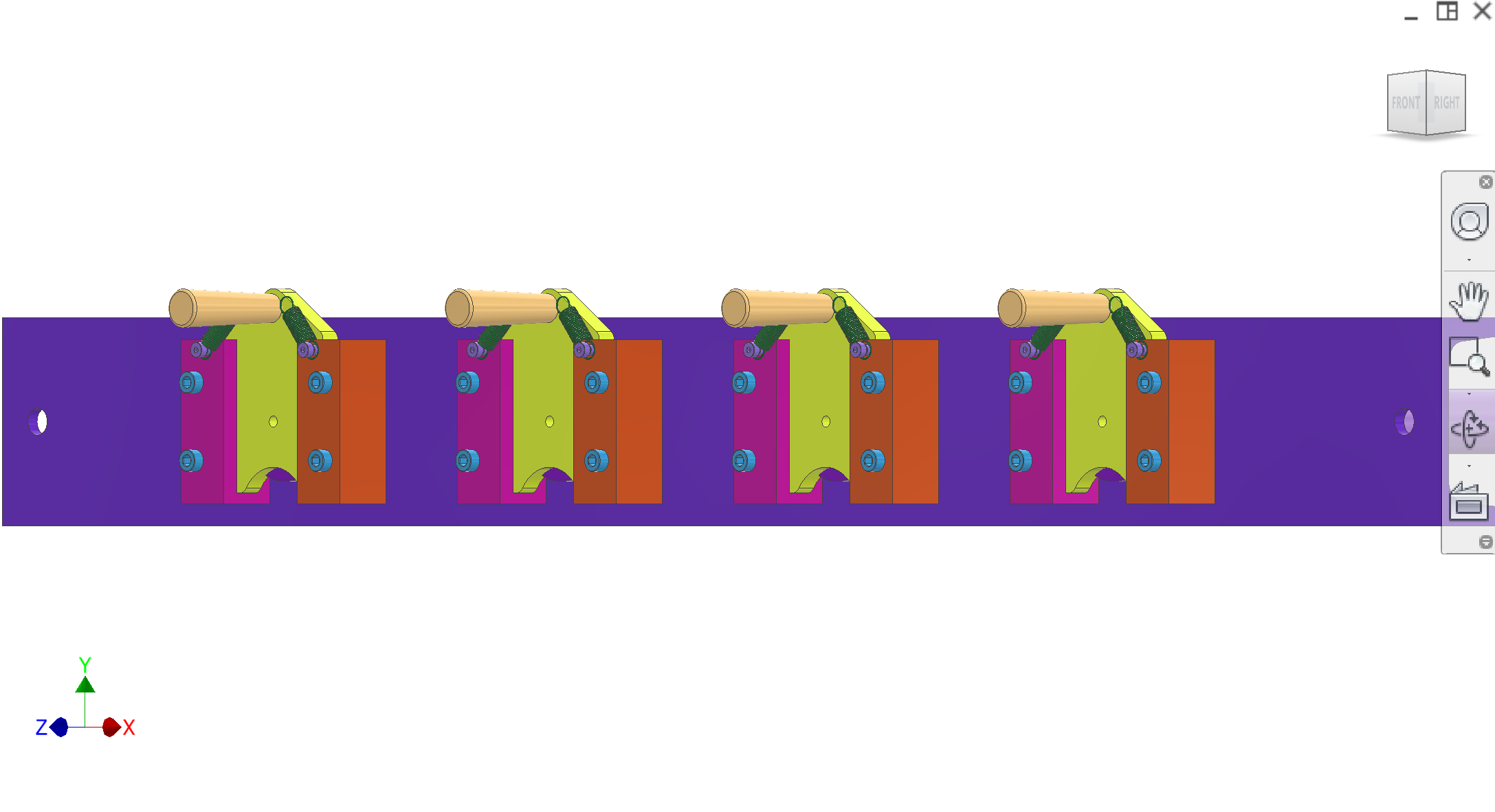
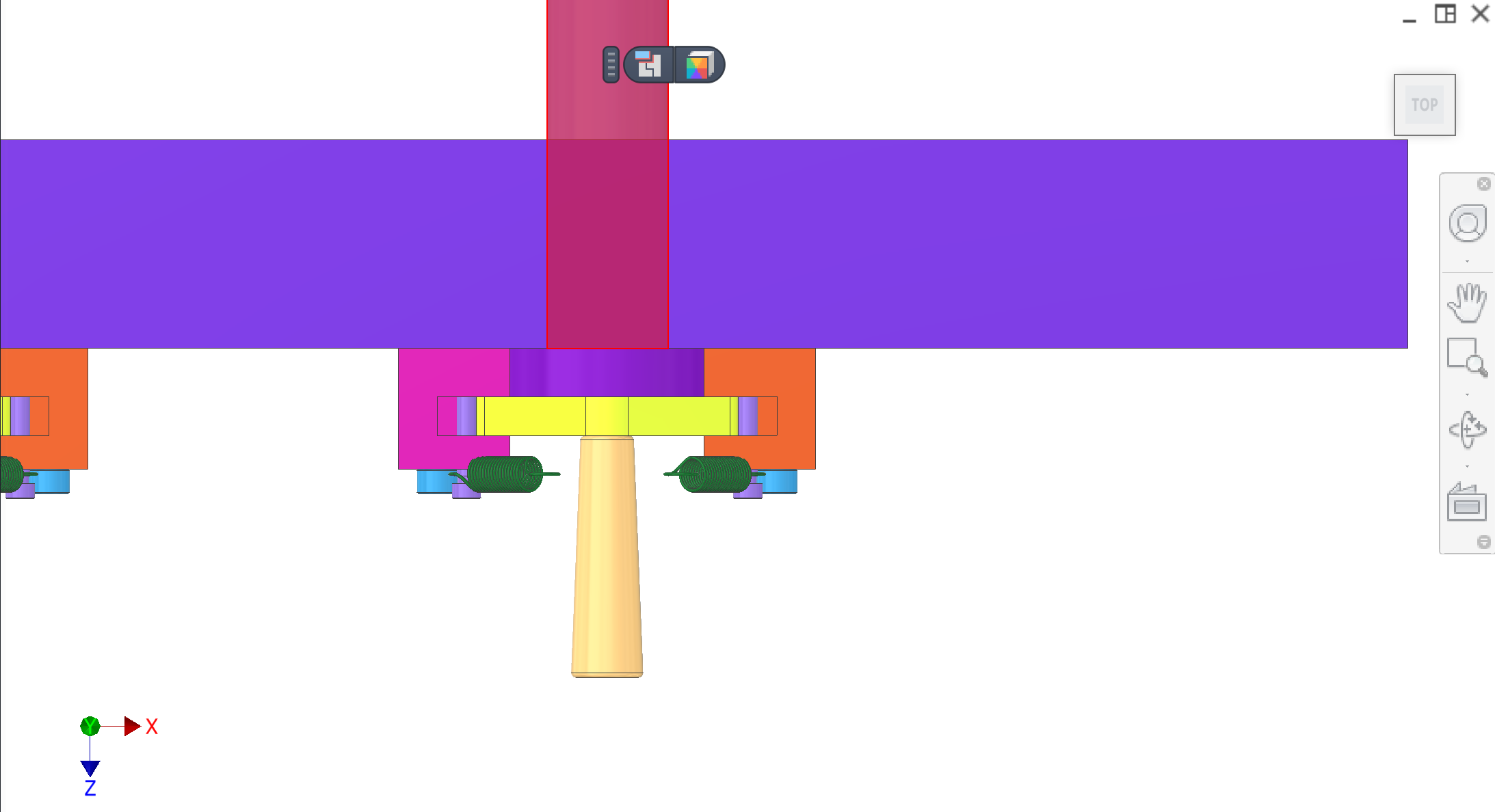
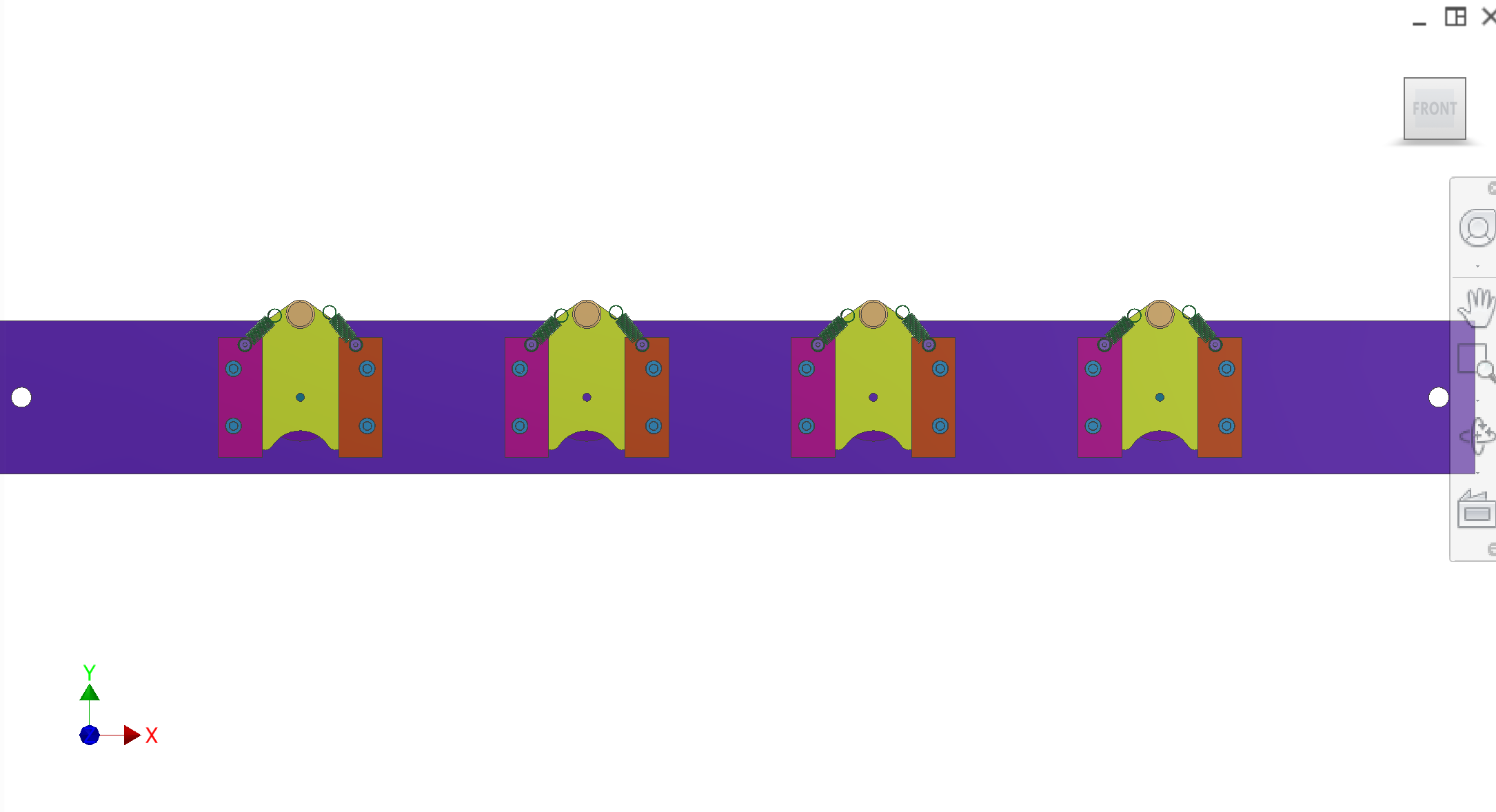
The plunger drive bracket is the actuation bracket within the core ejection system that carries four plungers and transmits axial force from the drive rods. It pushes and pulls plunger bases strictly in the ejection-axis direction, avoiding racking moments and keeping plungers concentric with the filter tube.
Introduction
The plunger drive bracket couples the drivetrain actuation (via plunger drive rods) to the four core ejection plungers. Its key requirement is kinematic purity: the bracket must apply only axial force (forward/back along the machine's ejection axis) and must not introduce left/right/up/down moments to the plungers. Maintaining this avoids the critical failure mode of plunger racking and sticking.
Colour key & components
Drive bracket, actuation interfaces, and (optional) guillotine-style insertion/removal mechanism.
Colour(s)
Component
—
Plunger drive bracket — carries four plungers and moves in the ejection travel direction.
—
Guillotine / sliding insertion access — optional mechanism that allows the plungers to be removed for service while keeping the push/pull behavior constrained.
Figures
Assembly CAD from Plug-ejection/images/ plus bracket-focused iso / top / front views on this page. Refer to Figure 1–Figure 4.
Figure 1. Plunger drive bracket in full core ejection assembly context (shared CAD).
1 / 4
Recommended figures (contractor clarity)
Add figure: Guillotine / service access — open vs closed states for plunger removal.
Add figure: Four-plunger alignment — concentricity to filter tubes with dimensions (supplement Figures 2–4).
Racking risk — if any moment is introduced, plungers can rack in the filter tube, leading to sticking and damage.
Sticking/jam failure mode — a stuck plunger can propagate forces into the drive mechanism; bracket must be designed to minimize moment amplification.
DFM & manufacturing (China)
Optional guillotine approach — sliding rails + central plate "door" to allow plungers to be removed for service while preserving the constrained push/pull engagement during operation.
Low-friction materials — consider engineering plastics (e.g., Delrin / fiber-reinforced polymer) where sliding interfaces are required, but ensure any food-zone contact remains safe.
Questions for contractor
Propose an insertion/removal mechanism for plungers (guillotine vs alternate) that preserves axial-only actuation and repeatable concentricity.
Define how to validate that the bracket applies no meaningful moments to plungers (tests/inspection/measurement approach).
Propose materials for sliding interfaces that are low friction yet compatible with washdown and food safety (including microplastic risk).